
Data Center Developers Are Zeroing In On A New Target
February 16, 2026
The race to build artificial intelligence data centers—now a hundred-billion-dollar sprint—is targeting a new asset class: bitcoin mining facilities.
Across the United States, hyperscale technology companies are investing hundreds of billions of dollars to expand AI computing capacity. Companies including Microsoft, Google, Oracle, OpenAI, and Meta are rapidly developing gigawatt-scale data centers to power increasingly sophisticated AI systems and deploy them at scale. But growth is running into constraints. Local opposition to large projects is mounting. Water and electricity usage are under scrutiny. Grid interconnection approvals can take years. As power bottlenecks intensify, developers are looking for faster solutions. Bitcoin mining sites offer one.
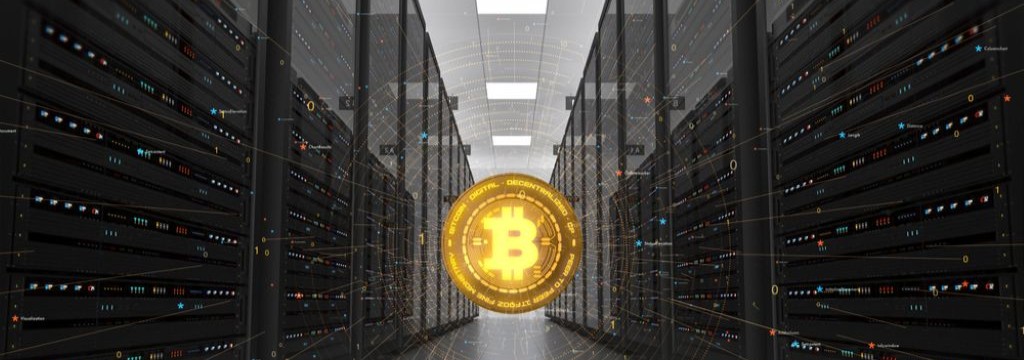
Originally built to power energy-intensive cryptocurrency operations, many mining facilities already have what AI developers need: large secured power allocations, access to low-cost electricity, industrial cooling systems, expansive campuses, and high-bandwidth connectivity potential.
Conversion is not simple. AI data centers require different hardware, greater redundancy, and often denser cooling and power systems than bitcoin mines. Retrofitting a facility can cost tens of millions of dollars. Yet developers are willing to pay for one key advantage: speed. Building new substations and transmission lines can take years, and interconnection queues continue to lengthen. Partnering with existing mining operators allows AI companies to activate available energy capacity far more quickly and bring projects online sooner.
Demand For AI Drives The Shift
The transition is already underway. In November, Bitfarms Ltd. announced it would convert its 18-megawatt bitcoin mining facility in Washington state to support AI workloads after signing a $128 million agreement with a large publicly traded data center provider. The company’s CEO said that even though the site represents less than 1% of its developable portfolio, converting it to a GPU-as-a-Service model could generate more net operating income than the company has ever earned from bitcoin mining.
Other miners are following suit. CleanSpark appointed a senior executive focused on data centers as it seeks to diversify beyond bitcoin. Companies including TeraWulf, Soluna Holdings, and Hut 8 have announced deals to retrofit existing facilities, build AI infrastructure on current sites, or colocate AI operations alongside mining.
Investment firm VanEck reported in January that mining activity declined roughly 2%, with the network hash rate down about 6%, attributing the drop partly to miners reallocating power toward AI data center demand. The firm projects AI data center demand will grow at a 24% compound annual rate through 2030 and expects miners to continue redirecting energy resources to AI development.
Digital asset manager CoinShares estimates that AI data centers can generate roughly three times the per-megawatt returns of bitcoin mining, offering more stable and predictable revenue. By October, bitcoin firms had announced approximately $65 billion in AI-related contracts. CoinShares projects that for six publicly traded mining companies pursuing AI projects, bitcoin revenue could fall from about 85% of total revenue in 2025 to under 20% by the end of 2026.
Morgan Stanley estimates bitcoin mining firms control roughly 6.3 gigawatts of operational large sites and another 2.5 gigawatts under construction. The bank describes these sites as the fastest and lowest-risk path to securing electricity for AI expansion. Converting mining facilities into AI data centers could generate significantly higher equity value per watt than continuing to mine bitcoin.
Consulting firm WiseGuy Reports says the pivot has moved beyond experimentation. Hyperscale companies are now signing multibillion-dollar pre-lease agreements before retrofits are complete, effectively launching a land grab for power capacity.
Falling bitcoin prices are adding further pressure. After peaking around $124,000 in October, bitcoin has dropped to roughly $70,000—below the cost of production for some operators—making AI conversion even more attractive.
How Much Capacity Can Be Converted?
The exact number of convertible sites is unclear. The Energy Information Administration estimated that 137 bitcoin mines were operating in the U.S. in 2023, accounting for roughly 2.3% of national electricity consumption. Not all facilities are suitable for AI retrofits, and smaller operators may lack the capital required for conversion.
Still, for miners that control land, grid access, and sufficient megawatt capacity, demand appears strong. Build-to-suit arrangements with AI tenants reduce risk: if operators can demonstrate available power and the ability to construct a Tier 3-quality facility shell, tenants are often prepared to commit capital early.
AI Growth Faces Its Own Questions
The explosive rise of generative AI platforms has fueled this infrastructure expansion. Hundreds of millions of users now rely daily on tools that generate text and images.
However, widespread business adoption is uneven. According to a fall 2025 Census Bureau Business Trends and Outlook Survey of 200,000 small businesses, AI usage among small firms has grown from 3.7% in 2023 to 9.7% in September 2025. Adoption varies significantly by company size, and in some segments growth has slowed.
For now, though, hyperscale developers appear convinced that AI demand will continue to expand—and they are racing to secure the power needed to sustain it.
Source: SFBJ