
Is There A Warehouse Construction Boom Right Around The Corner?

July 22, 2026
The warehouse construction boom that followed the COVID-19 pandemic transformed the industrial real estate landscape, with developers racing to meet surging demand for logistics space.
By 2023, however, that rapid expansion began to cool as geopolitical uncertainty, higher construction costs, tariffs, and regulatory challenges tempered new development.
Demand for warehouse space never disappeared—it simply evolved. Instead of leasing any available facility, tenants became more selective, prioritizing modern buildings in strategic locations that could support increasingly sophisticated supply chains. While warehouse construction slowed nationwide, activity remained resilient in regions such as the Southeast and Gulf Coast, where logistics demand continued to outpace many other markets. E-commerce has also remained a key driver, although companies are now placing greater emphasis on efficiency and operational performance rather than sheer expansion.
Now, many industrial real estate analysts believe the market is approaching a turning point, with warehouse construction expected to accelerate again beginning in late 2026 and into 2027.
An Industry At An Inflection Point
A recent report from Interact Analysis, U.S. Warehousing Construction Set for Rebound in 2027, argues that the sector is nearing a significant transition. Senior analyst Matthieu Kulezak describes 2027 as a pivotal year for warehouse development, pointing to improving market fundamentals and renewed demand for large-scale logistics facilities.
Clarion Partners reached a similar conclusion in its June market outlook, noting that long-term structural demand combined with emerging cyclical improvements is creating conditions that increasingly favor new industrial development.
One of the strongest indicators supporting this outlook is the resurgence of large-format distribution centers. According to Cushman & Wakefield’s Large-Format Deals Return report, leasing activity for warehouses exceeding 500,000 square feet has climbed 32% year over year. Third-party logistics providers and manufacturers account for roughly two-thirds of those transactions.
Even more notable, modern logistics facilities represented nearly two-thirds of total net absorption, highlighting tenants’ growing preference for newly built industrial space. Kulezak notes that big-box leasing has historically served as a leading indicator for broader warehouse market activity, making the recent increase especially significant.
Why Bigger And Newer Matters
Today’s logistics operations require far more than warehouse space alone. Companies increasingly need facilities capable of supporting automation, robotics, higher inventory levels, and faster distribution networks.
Much of the nation’s existing warehouse inventory simply wasn’t designed for those demands. According to Interact Analysis, approximately 65% of U.S. industrial space was built before 2000, while nearly 90% predates 2010. Many of these older buildings feature lower ceiling heights, fewer loading docks, outdated sprinkler systems, smaller truck courts, and layouts that cannot efficiently accommodate modern automated operations.
Newer facilities typically offer clear heights between 32 and 40 feet or more, significantly improving storage capacity and operational efficiency. Larger buildings also provide flexibility during periods of supply chain disruption. While lean inventories remain desirable during stable conditions, larger distribution centers allow companies to absorb fluctuations in freight volumes and respond more effectively to changing market conditions.
The Flight To Quality
This shift toward newer industrial properties has fueled what many in the industry describe as a “flight to quality.”
“Tenants are becoming increasingly strategic in evaluating both building design and location,” said Jason Price, Americas Head of Logistics & Industrial Research at Cushman & Wakefield. “Rather than focusing solely on rental rates, companies are prioritizing long-term operational efficiency, occupancy costs, and productivity.”
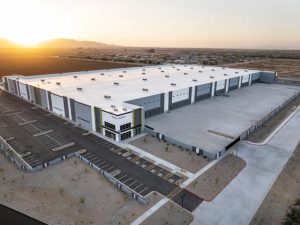
Several major markets are already demonstrating this renewed momentum. JLL reported record leasing activity in California’s Inland Empire during the second quarter of 2026, with 15.5 million square feet of new leases signed. June alone accounted for 7.5 million square feet, while year-to-date gross absorption reached a record 22.6 million square feet.
Demand was led by third-party logistics providers, retailers, and consumer goods companies, with multiple leases exceeding 400,000 square feet. Perhaps most significantly, net absorption surpassed new construction deliveries for the first time in four years, signaling that supply and demand are once again moving into balance and potentially setting the stage for additional development.
Development Challenges Remain
Despite improving market conditions, developers continue to face meaningful obstacles. Construction costs remain elevated, while tariffs, energy prices, geopolitical tensions, and financing costs continue to influence development decisions. For many projects, the challenge is determining whether future rental income will justify today’s significant construction investment.
Clarion Partners notes that developers base decisions on expected future rents rather than current market conditions. In many regions, replacement costs exceed achievable rents, making it difficult to justify new construction until rental growth catches up with development expenses. As long as that gap persists, many projects are likely to remain on hold.
Early Signs Of The Next Wave
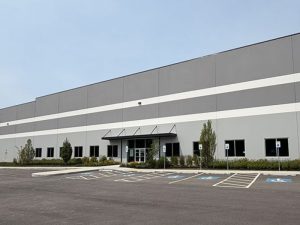
Even with these headwinds, signs of renewed investment are emerging. In July, global shipping giant A.P. Moller-Maersk announced the opening of a $100 million, 617,000-square-foot fulfillment center in Hopedale, Massachusetts, approximately 40 miles outside Boston. The project reflects growing confidence among major logistics operators that demand for large, technologically advanced distribution facilities will continue to strengthen.
While warehouse construction is unlikely to return immediately to the frenetic pace seen during the pandemic, industry analysts increasingly believe the market is entering its next growth phase. As companies modernize supply chains and prioritize efficiency, the next warehouse boom may already be taking shape.
Source: AJOT