
Does Terreno Realty’s Landfill-To-Logistics Strategy Signal A Deeper Competitive Edge In Miami Industrial?
January 26, 2026
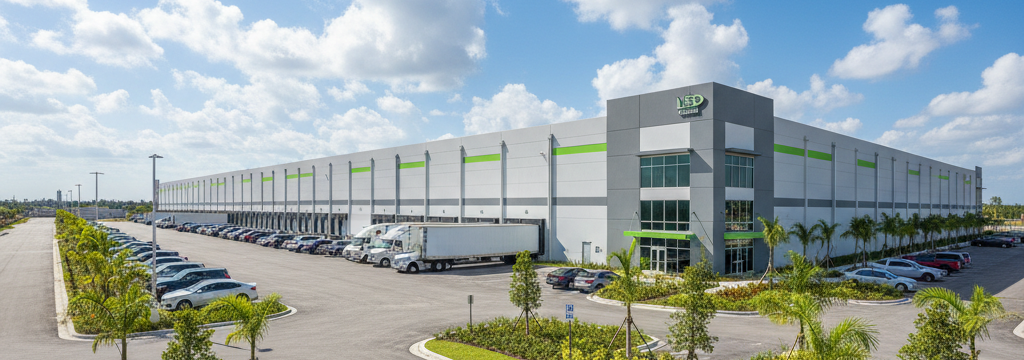
Terreno Realty Corporation recently completed and stabilized Countyline Corporate Park Phase IV, Building 32 in Hialeah, Florida.
The fully leased, 164,000-square-foot industrial distribution facility represents a $43.4 million investment and is expected to achieve a stabilized cap rate of approximately 6.0%, with LEED certification anticipated.
Building 32 is the first completed asset within the 121-acre Countyline Phase IV landfill redevelopment. It marks an important milestone in a broader plan to deliver ten buildings totaling roughly 2.2 million square feet of industrial space. Once fully built out, Countyline Phases III and IV will expand Terreno’s Miami portfolio to 17 buildings and approximately 3.5 million square feet.
Terreno Realty’s Investment Narrative
The completion and full leasing of Building 32 provides useful context for evaluating Terreno Realty’s broader industrial investment narrative. At its core, Terreno’s thesis remains straightforward. Investors are backing a focused industrial REIT that continues to add leased, income-producing assets while trading modestly below some estimates of intrinsic value and paying a consistent dividend. The stabilization of Building 32 fits neatly into this framework, reinforcing near-term revenue visibility and supporting management’s recent decision to secure a new $200 million term loan.
With the project already stabilized at an estimated 6.0% cap rate, its impact is incremental rather than transformative. It improves cash-flow certainty but does not fundamentally alter the investment case. More meaningful catalysts lie ahead, including execution across the remainder of the Countyline development and broader leasing conditions in Terreno’s core markets.
That said, risks remain. Recent earnings growth has benefited from one-off gains that are expected to roll off, potentially weighing on forward results. Continued development also requires disciplined capital allocation to avoid shareholder dilution or balance-sheet strain.
Terreno Realty’s shares have performed well but still appear modestly undervalued—by roughly 7%—suggesting that while the landfill-to-logistics strategy adds credibility to the story, its long-term value will depend on consistent execution rather than any single completed building.
Source: Simply WallSt