
Why Miami’s Airport-Adjacent Warehouses Remain In Demand
September 2, 2026
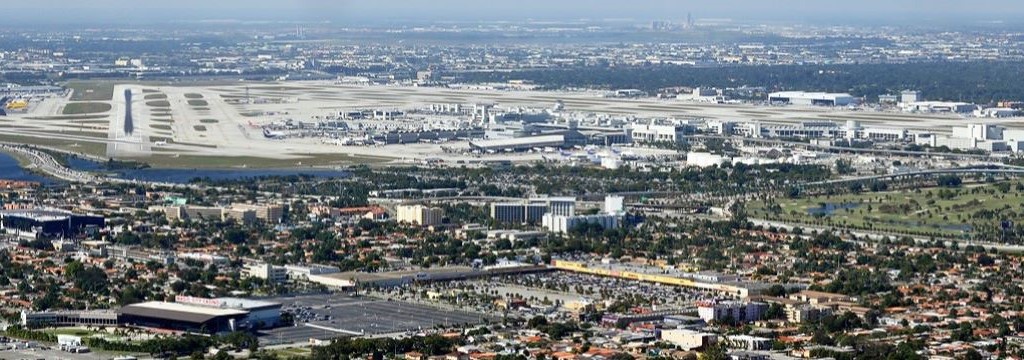
Miami International Airport’s continued growth as a global cargo gateway is helping reinforce one of South Florida’s most enduring industrial real estate advantages: warehouse space located within minutes of the airport. MIA handled a record 3.4 million tons of freight in 2025, a 13.2% increase from the prior year, with international shipments accounting for approximately 85% of freight volume.
For warehouse users in Airport West, Doral and Medley, that level of cargo activity creates something that cannot easily be duplicated elsewhere in South Florida — immediate access to one of the country’s most important international freight hubs.
Location Matters When the Cargo Is Time-Sensitive
Not every warehouse tenant needs to be close to an airport. For companies handling perishables, pharmaceuticals, e-commerce merchandise and other time-sensitive or high-value products, however, the difference between being several miles from an air cargo terminal and being on the other side of the county can have a measurable operational impact.
MIA describes itself as the nation’s leading airport for both total freight and international freight. The airport also serves more than 35 all-cargo carriers, giving logistics companies extensive options for moving goods between Miami and international markets.
That activity extends well beyond the airport property itself. Freight arriving at MIA frequently needs to be received, inspected, refrigerated, repackaged, stored, consolidated or transferred before moving to its next destination.
Those functions create demand for nearby industrial buildings.
Perishables Keep Miami’s Cargo Network Moving
Miami occupies an especially important position in the movement of perishable products from Latin America and the Caribbean into the United States.
Flowers, seafood, fruits, vegetables and other temperature-sensitive products often have little tolerance for transportation delays. Warehouse and distribution facilities close to MIA therefore provide an important link between aircraft, refrigerated storage, wholesalers, retailers and trucks moving products throughout Florida and the rest of the country.
The same proximity advantage applies to pharmaceutical and life-science products, where temperature control, security and carefully managed supply chains can be particularly important.
E-Commerce and High-Value Goods Add Another Layer of Demand
Air freight is also used extensively for products where speed or value justifies the additional transportation cost.
Electronics, technology products, replacement parts, luxury merchandise and e-commerce shipments can all benefit from being processed through warehouse facilities close to the airport.
For these users, warehouse selection is about more than the cost per square foot. Truck travel time, highway accessibility, airport access and the ability to move goods rapidly through the building can be equally important considerations.
That helps explain the continued appeal of Miami-Dade industrial submarkets surrounding MIA.
Why Airport West, Doral and Medley Stand Out
The industrial areas immediately west and northwest of Miami International Airport offer a combination that is difficult to reproduce elsewhere in the region.
Airport West and Doral provide exceptionally close access to MIA while connecting warehouse users with major transportation corridors serving Miami-Dade County. Medley extends the industrial corridor farther northwest and has long accommodated logistics, distribution, manufacturing and larger warehouse operations.
Together, the three areas allow companies to choose among different building sizes, configurations and locations while remaining closely connected to the airport and the broader South Florida transportation network.
That geographic advantage becomes particularly important for businesses whose operations involve multiple daily trips between warehouses, cargo facilities, freight forwarders and customers.
A Softer Industrial Market Has Not Eliminated the Location Premium
South Florida’s broader industrial market has been moving toward more balanced conditions.
According to Matthews Real Estate Investment Services, South Florida industrial vacancy increased to 5.8% during the first quarter of 2026 as new supply outpaced tenant demand. Annual net absorption was negative by approximately 1.1 million square feet.
Even with that normalization, asking rents remained close to historic highs, increasing 1.2% year over year to approximately $18.64 per square foot. Matthews also reported that leasing continued to be driven by logistics, distribution, e-commerce and trade-related companies.
The numbers illustrate an important distinction for Miami industrial real estate: slower overall leasing does not make every warehouse location interchangeable.
Buildings with efficient access to MIA, highways and major population centers retain operational advantages that cannot be created simply by offering less expensive space farther away.
Miami’s Cargo Growth Strengthens the Long-Term Case
MIA’s 2025 cargo numbers provide another reason to watch airport-adjacent industrial properties.
The airport processed approximately $89 billion in origin-and-destination air trade during the year, while in-transit freight exceeded origin-and-destination freight for the first time in more than a decade. That shift further emphasizes Miami’s role not simply as a destination for cargo, but as an international transfer and distribution hub.
For owners and users of warehouses in Airport West, Doral and Medley, that continuing flow of goods supports the underlying value proposition of these submarkets.
Industrial market conditions will change. Vacancy will rise and fall, development pipelines will expand and contract, and rents will respond accordingly.
But companies moving products by air will continue to place a premium on minimizing the distance between the runway and the warehouse.
And in Miami, few industrial locations can compete with the neighborhoods surrounding MIA for that advantage.